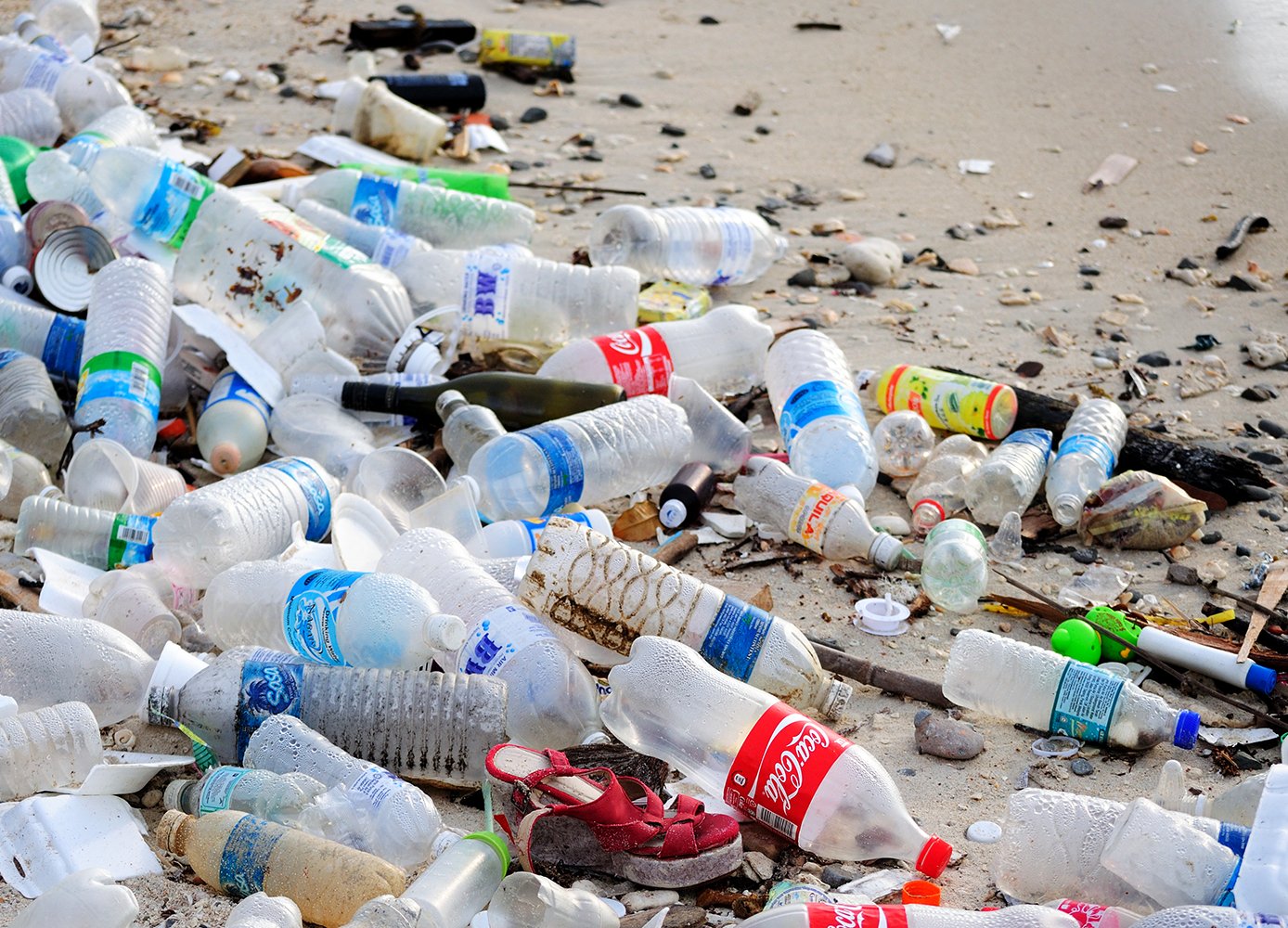
PFAS in drinking water, what changed in the EU on 12 January 2026
How the January 2026 PFAS regulations reshape transparency for the hospitality industry

Water is the foundation of the hospitality experience. It is the first thing placed on the table and the essential element in the finest culinary creations. For years, the conversation around water has focused on taste and origin. Now, a new dimension has taken center stage: safety and transparency. As of 12 January 2026, the European Union has implemented a landmark shift in how drinking water is monitored and managed. This change impacts every hotel, restaurant, and venue that prides itself on excellence.
This is not an overnight fix that makes contaminants vanish. Instead, it marks the start of a new regulatory era focused on systematic monitoring and transparency. For premium hospitality providers, understanding these changes is the first step toward leading with confidence and ensuring the water served to guests meets the highest standards of integrity.
Bringing "Forever Chemicals" into the Light
To understand the new regulations, we must first understand the target: PFAS. These are per- and polyfluoroalkyl substances, a large family of synthetic agents used for decades in industrial and consumer products. They are often referred to as "forever chemicals" because they are incredibly persistent and resist breaking down in the environment.
Their persistence poses a challenge for water sources across Europe. Because they are highly mobile in water, they can travel long distances from their source. For a modern B2B audience, the chemistry is less important than the operational reality. These substances are pervasive, and the previous lack of systematic monitoring meant that many water supplies were an unknown quantity. The new rules do not magically remove them, but they finally compel us to measure them.
What Changed on 12 January 2026
On 12 January 2026, the recast Drinking Water Directive brought new EU-wide rules into full application. For the first time, there is a mandatory, harmonized obligation to monitor PFAS in drinking water across all Member States.
The regulation introduces specific parameters that define compliance. The official text establishes clear limit values that must be monitored. Member States are now required to ensure drinking water contains no more than 0.5 µg/l for "PFAS Total" and 0.1 µg/l for the "Sum of PFAS".
This system ensures that both broad contamination and specific toxic risks are tracked. If these limit values are exceeded, the directive mandates action. This could include adding treatment steps, restricting use, or closing contaminated wells to protect public health.
Two Worlds: Legal Limits vs. Practical Reality
It is important to view this regulation as a transition rather than a switch. We are currently navigating two parallel worlds. On one side is the legal framework, which sets strict parametric values and compliance deadlines. On the other side is the practical reality of water treatment infrastructure.
Removing PFAS from water is technically difficult and can be energy-intensive. Conventional drinking water processes do not easily remove these chemicals, often requiring advanced technologies like activated carbon or reverse osmosis. This disconnect means the road ahead is long. We should expect continued debate regarding enforcement, the cost of upgrades, and the gradual improvement of infrastructure over time.
Implications for Hospitality and Guest Expectations
For the hospitality sector, these new rules serve as a wake-up call regarding procurement. Guests today are more informed than ever. The assurance that the water they consume is monitored is becoming a fundamental expectation.
The new rules contribute directly to the "right to safe drinking water". When a guest orders a carafe of water, they are trusting the establishment to have vetted that product. With the new data requirements, transparency becomes non-negotiable.
This is even more relevant in regions facing water stress. Baseline water stress measures the ratio of total water withdrawals to available renewable supplies. In areas where competition for water is high, the quality of the available water becomes even more critical, requiring hospitality venues to be particularly vigilant.
The BE WTR Approach: Trust and Transparency
At BE WTR, we believe that trust is built on honesty, not impossible promises. The new EU regulations reinforce the importance of our mission to provide local, sustainable water solutions. We take a transparent, documented approach to water quality.
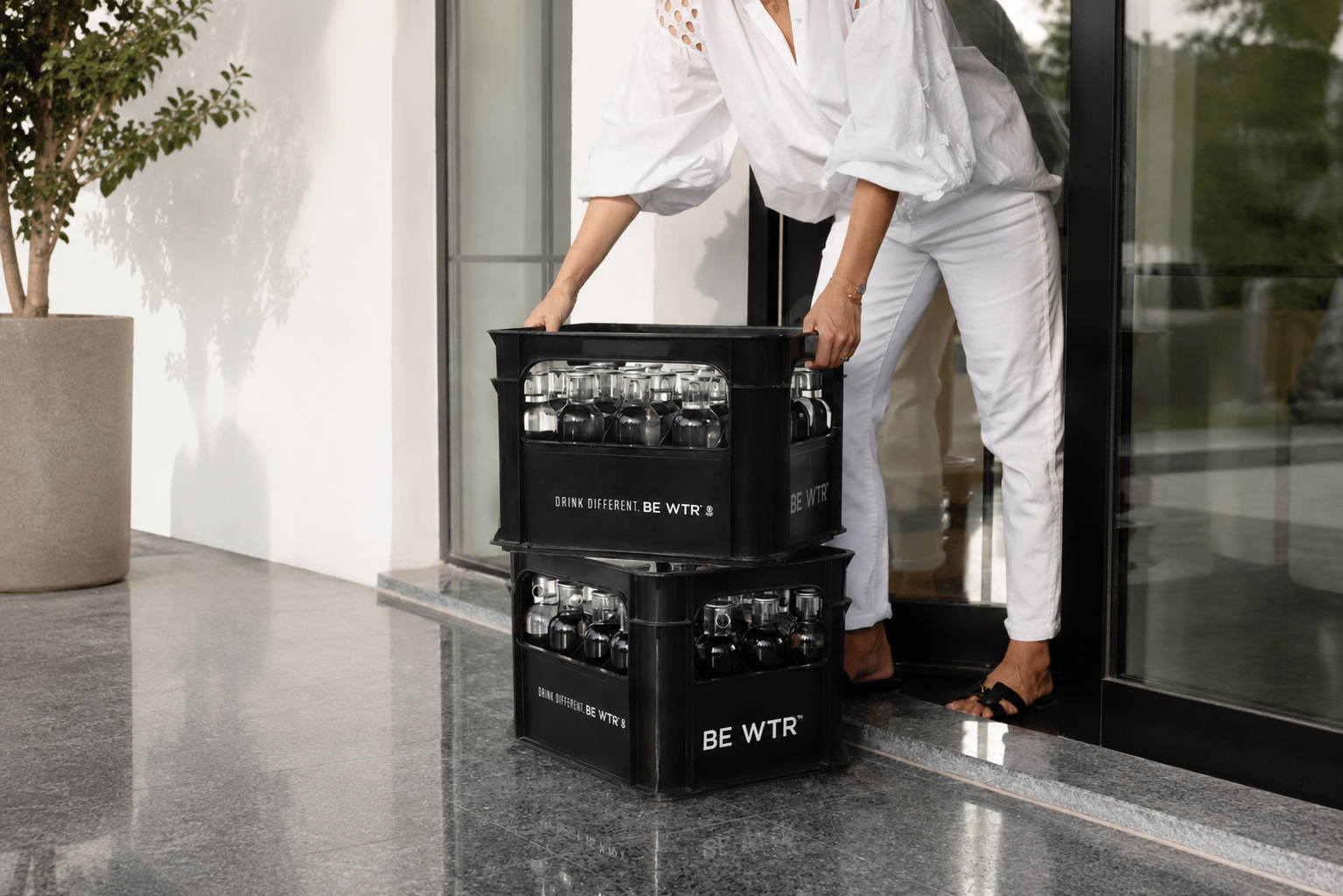
The bottle delivery service provided by BE WTR is designed to help reduce PFAS concentrations, through the filtration technologies used at our BiG bottling sites. Our AQTiV systems for home and professional use are designed to deliver a premium sensory experience, with a focus on hygiene, taste, and texture, but they are not designed to filter PFAS.
We help our partners navigate this complex landscape by focusing on transparency. Instead of making blanket claims, we encourage an open dialogue about local water value and the specific filtration capabilities relevant to your venue. This ensures that "quality" is a verified metric rather than just a marketing slogan.
Hospitality Checklist: Staying Ahead of the Curve
To maintain a premium standard in this new regulatory environment, hospitality teams should take the following steps:
-
Review Local Water Reports: proactively ask your local water utility for their latest data on "PFAS Total" and "Sum of PFAS" to ensure they meet the new 0.5 µg/l and 0.1 µg/l limits.
-
Train Your Staff: Ensure your sommeliers and service teams can answer simple guest questions about water sourcing and safety with confidence.
-
Assess Water Risks: Understand if your venue is in an area of high baseline water stress, which may require more robust water management strategies.
-
Partner for Quality: Work with water solution providers who prioritize transparency and help you deliver a consistent, high-quality guest experience.
Conclusion
The introduction of mandatory PFAS monitoring on 12 January 2026 is a significant first step, but it is not the end of the journey. For the hospitality industry, this is the start of a longer transition toward greater awareness and stricter enforcement. By staying informed and prioritizing transparency, you ensure that your guest experience remains resilient and trusted.
To learn more about how to elevate your water experience, visit BE WTR.
Be proud. Be happy. Be responsible. BE WTR.







.png?width=2000&height=1000&name=website%20%202000x1000%20(2).png)
.png?width=808&height=800&name=left-right%20image%20(1).png)